
Keramos

درباره سایت
آخرین مطالب
- RHI & Magnesita how they stack up
- American Ceramic Society Bulletin March 2017 – Vol. 96 No. 2
- News:RHI and Magnesita agree to merge در کانون توجه
- ماجرای NEWS: Mining Finance: Investing in Iran getting 'easier'
- آنچه باید درباره News:Using Ceramics in Energy Storage بدانید
- روایت تازه از Refractory minerals outlook: slow growth period looms
- جزئیات تازه از Characterizing Components of Cements using Morphologi G3-ID
- بررسی RHI & Magnesita: how they stack up
- American Ceramic Society Bulletin March 2017 – Vol. 96 No. 2
- NEWS: Mining Finance: Investing in Iran getting 'easier'
امکانات وب
Next Generation Materials used in Solar Cell Farms
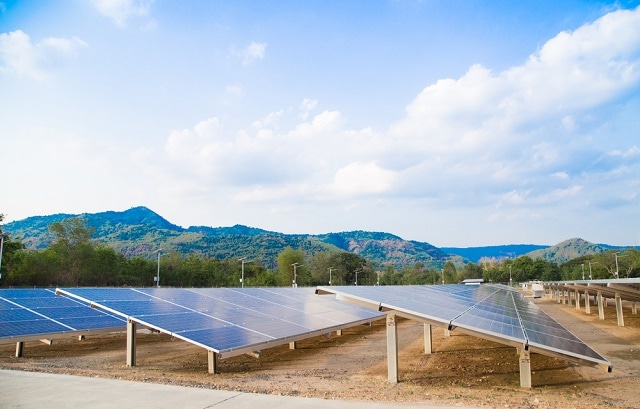
Image Credit: Notto Yeez | Shutterstock.com
The spread of solar cell farms - power plants fueled by the sun and typically found where the sun is plentiful and land is cheap - are evidence of the ever-evolving solar technology. Two forms dominate; photovoltaic (PV) solar farms and solar thermal technology.
PV solar farms have hundreds to thousands of solar panels mounted on large racks, often covering hundreds of acres to produce enough electricity to feed power grids and communities. Solar thermal technology precedes PV, and it works by capturing the suns heat to convert it into electricity. This form uses mirrors to concentrate the sun’s heat into a steam-generating central column that then spins a turbine to make electricity.
Solar Cell Farms Around the World
For example, Pakistani public company Quaid-e-Azam Solar Power (Pvt.) Limited is building the Quaid-e-Azam Solar Power Park, a $130 million project on about 500 acres of land in the Cholistan desert in Punjab, due to open in 2017. The farm is expected to have 5.2 million PV cells that produce as much as 1,000 megawatts of electricity, or enough power for 320,000 households.
Other countries including China and the U.S. are leaders in the solar farm industry, and many American utilities are pioneers in solar. First Solar, Inc. already have more than 10 gigawatts installed worldwide, and Mid American Energy, a subsidiary of Berkshire Hathaway, built the $2.4 billion, 550 megawatt Topaz Solar Farm to sell power to the California utility PG&E.
برچسب: next generation materials,next generation materials for energy chemistry,next generation materials for solar photovoltaics,next,generation materials for energy chemistry faraday discussion,next generation materials for defense,next generation building materials,next generation science materials,next generation construction materials,next generation energetic materials,next generation aerospace materials,
نویسنده: دانیال حکیمی