

Mineral supply chain and market competition awareness urged
One of industrial minerals’ key consuming markets, refractories, is expected to undergo a period of slow growth for the next few years, meaning at least steady, if not reduced, demand for refractory minerals.
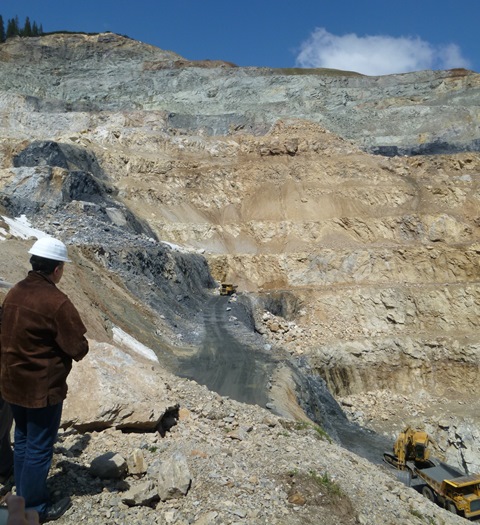
RHI AG’s Weissenstein magnesite mine, Austria, supplies feedstock for dead burned magnesia used in refractories
The steel industry is the main driver for refractories, consuming 70% refractory bricks and monolithics, and is projected to grow by a mere 0.5-1.8% in the next few years, according to Hans Jürgen Kerkhoff, President of the German Steel Federation.
Speaking at the opening session of last week’s UNITECR 2015 in Viea, the bieial gathering of the world’s refractories industry, Kerkhoff warned that the industry should be adapting to the “new normal” of steel production performance, ie. a low growth period, following many years of increasing output.
Kerkhoff highlighted China’s domestic steel market as “saturated”, with its steel production having peaked and now in decline for the first time in 25 years.
The concern here is that Chinese exports of low cost steel are increasing, especially to nearby Asian markets such as India, and thus impacting the domestic growth, and in turn, refractory demand, of other Asian steel industries.